JEROM PANNIER · 12 October 2026
The Parque Natural do Sudoeste Alentejano e Costa Vicentina protects about 110 km of Atlantic coast from São Torpes to Burgau; no new roads or resorts since 1995, which is why its farm tracks and coastal paths are the best gravel and cross-country riding in southern Portugal.
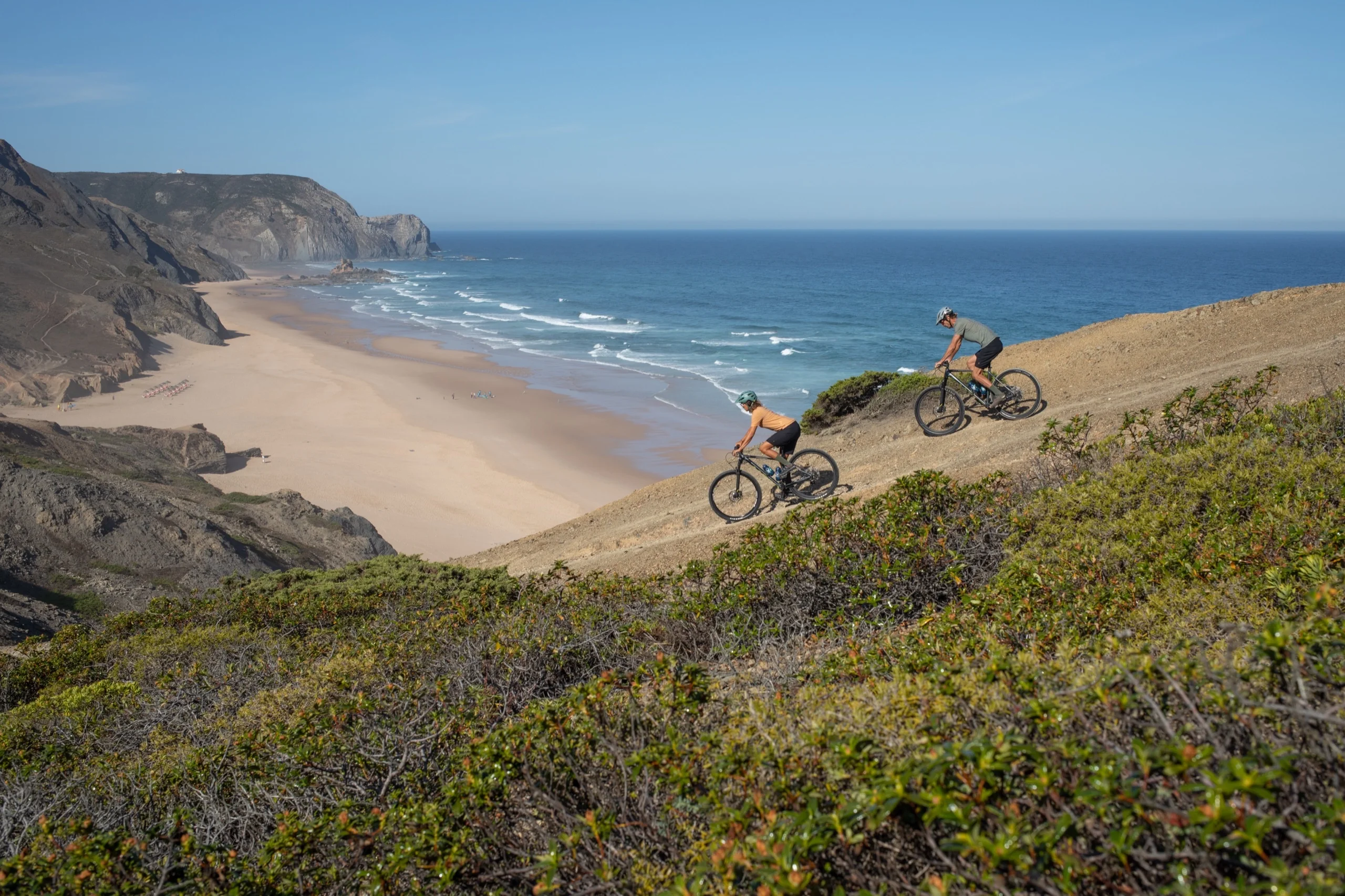
Every trip we run touches one protected area: the Parque Natural do Sudoeste Alentejano e Costa Vicentina. It runs about 110 kilometres along the Atlantic, from São Torpes near Porto Covo in the north to Burgau in the south, and inland for a few kilometres across the municipalities of Odemira, Aljezur and Vila do Bispo. It has been a natural park since 1995, and a protected landscape for years before that.
What that status means in practice: no new resorts, no new roads, no building on the cliffs. The coast you ride along today looks the way it looked when the park was drawn. That is rare in southern Europe, and it is the reason this stretch of Portugal has the best gravel and cross-country riding we know.
SKETCH, NOT TO SCALE · THE PARK IN DASHED OUTLINE, ±110 KM OF COAST
What the park gives a cyclist
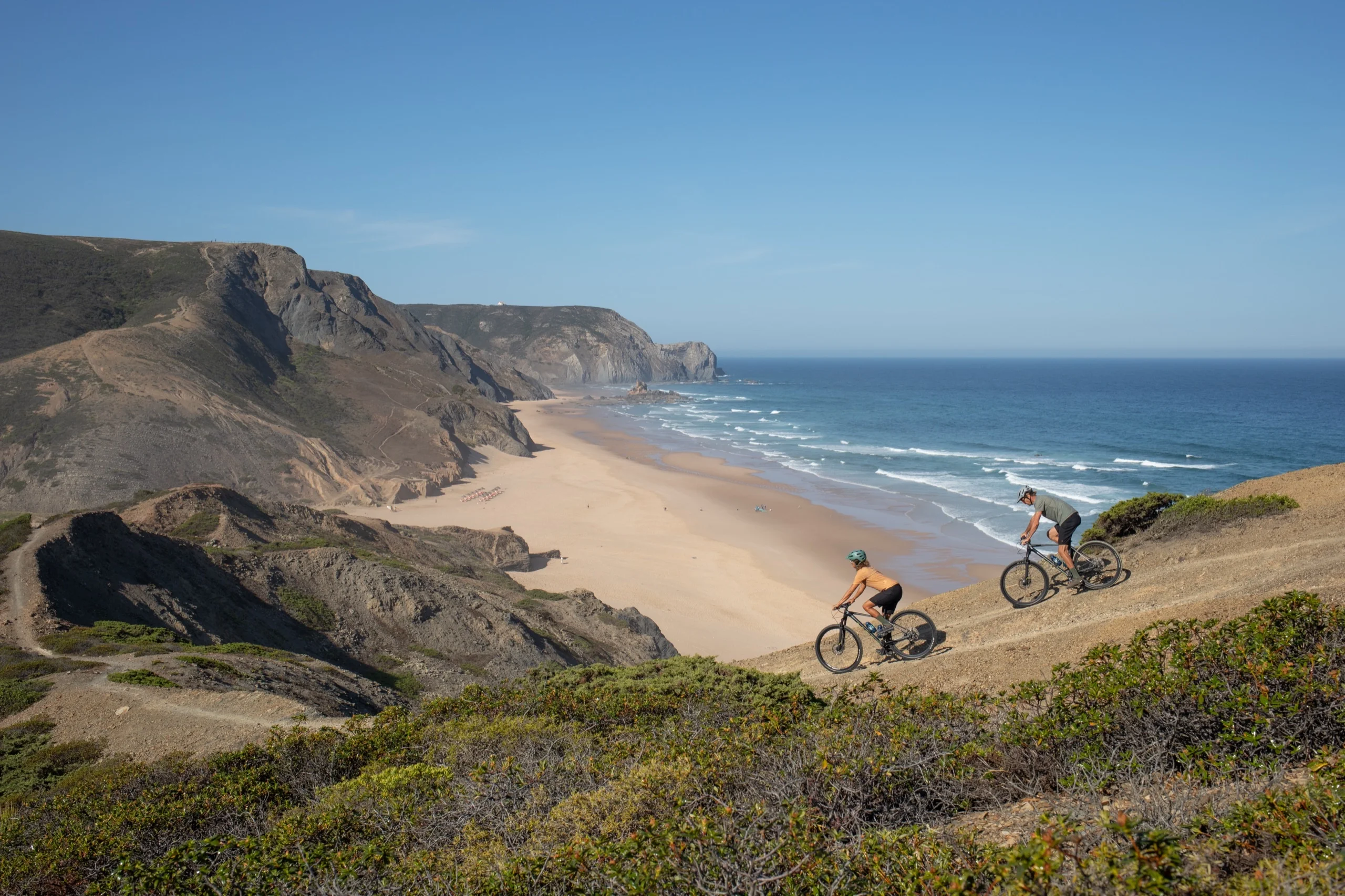
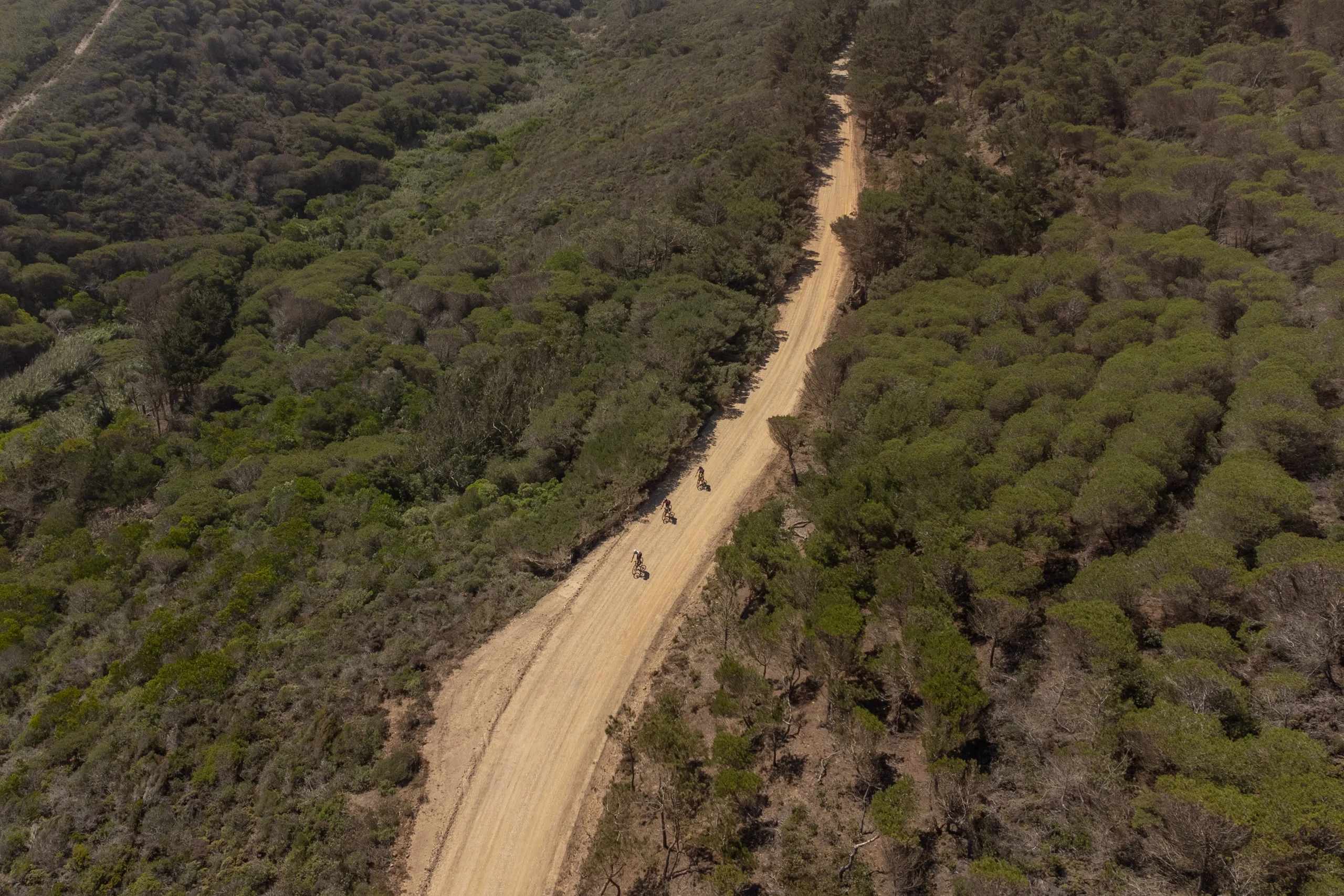
Tracks instead of roads. The park is laced with farm tracks, forestry roads and old fishermen's paths, most of them unpaved. The Rota Vicentina walking trails run through it too, and where they are open to bikes we use them. Our Wild West trip follows this coast from Santiago do Cacém down to Sagres, hotel to hotel, four riding days.
Surface that changes every hour. Hard clay inland, sand near the cliffs, loose rock around the cape. On a gravel bike that means attention; on a cross-country mountain bike it means fun. The sandy sections above Bordeira and Carrapateira are the ones riders talk about afterwards.
Almost no traffic. The N120 and N268 run through the park, and we avoid them. Away from those two roads, you can ride an hour without seeing a car.
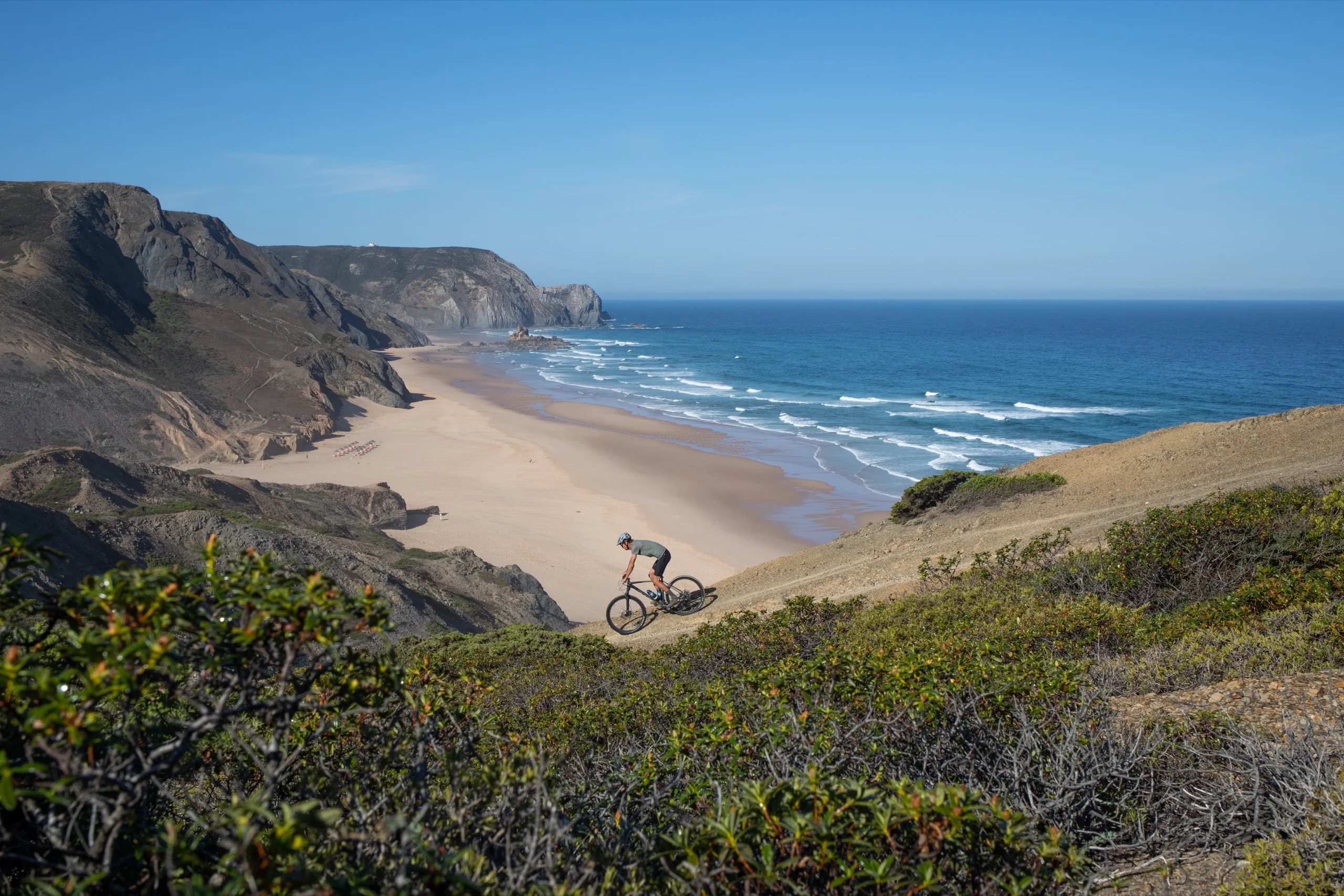
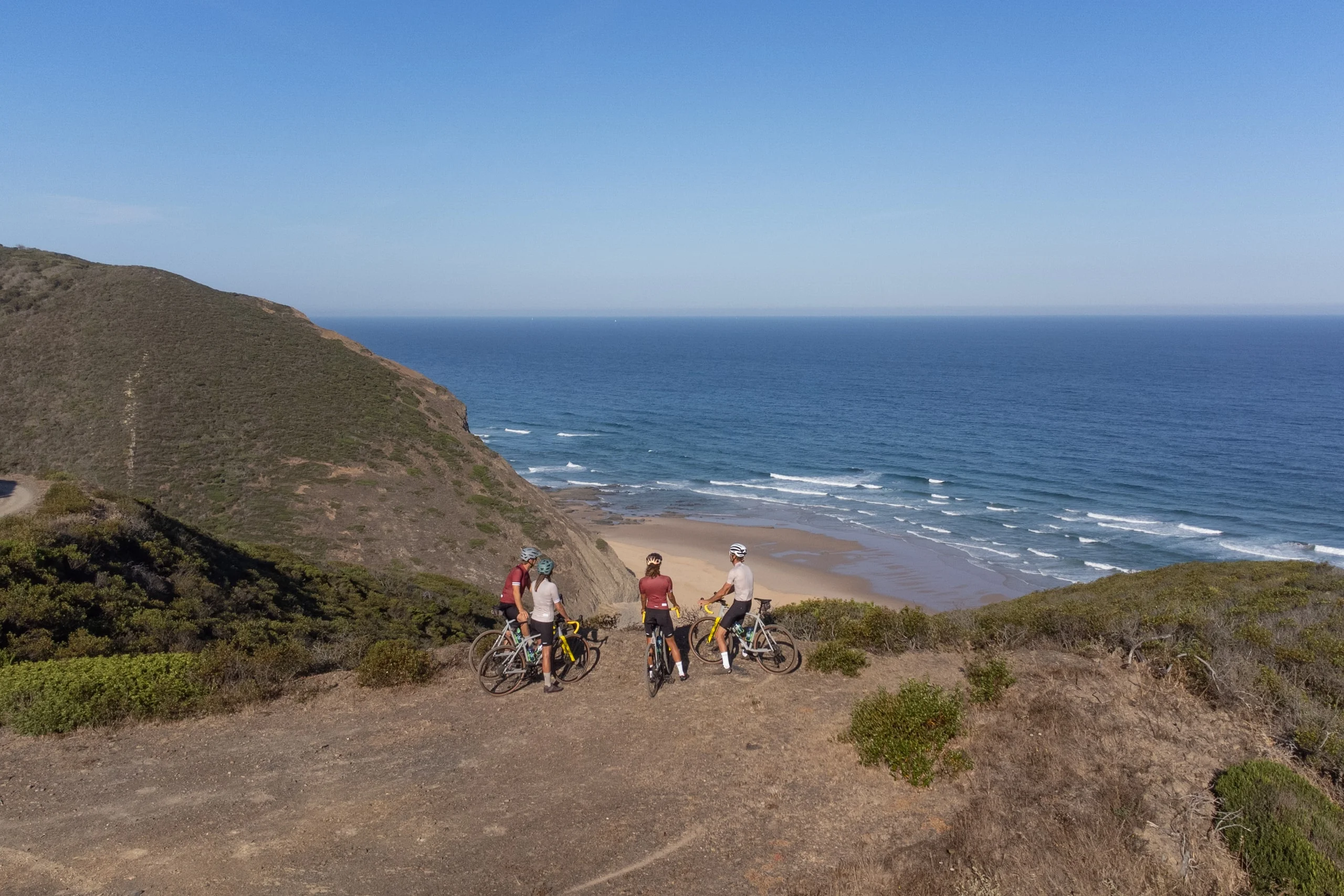
Beaches you reach only by bike or on foot. Barriga, Barranco, Amado, Arrifana at the quiet end. On the Lagos Base Camp gravel week, day 1 goes west to Cabo de São Vicente and day 2 north over the hills to Aljezur; both run inside the park for most of the day.
Gravel or cross-country?
Both work, and the same hotels serve both. Gravel is faster and covers more ground: the Lagos gravel week is 364 km over five days. Cross-country mountain bike is slower, more technical and better on the coastal singletrack above the cliffs; shorter kilometres, longer hours in the saddle. We run The Wild West and Lagos Base Camp in both styles, and e-bikes in both.
What the park asks of you
Stay on the tracks. Close gates. Carry your rubbish out. Don't ride the dunes. In the dry months, no fire of any kind. The park is a working landscape of small farms and fishing villages, not a theme park, and the people who live in it are the reason the restaurants are good.
Where to read more
The park's own information is at ICNF, the Portuguese institute for nature conservation, and the Rota Vicentina association publishes the trail network. We publish our routes once they are ridden and measured, never before.
Questions riders ask
Can you ride a gravel bike in the Costa Vicentina natural park?
Yes. The park is laced with farm tracks, forestry roads and old fishermen's paths, most of them unpaved, and the surface changes from hard clay to sand to loose rock within a day.
Is the natural park suitable for cross-country mountain biking?
Yes, and it is slower, more technical and better on the coastal singletrack above the cliffs. We run The Wild West and Lagos Base Camp in both gravel and cross-country styles, with e-bikes in both.
Are the roads in the park busy?
Only the N120 and N268, and we avoid them. Away from those two roads you can ride an hour without seeing a car.
Your own group? Plan your trip.